
Valve spring line
Complete valve spring lines: stress-relief tempering, inner chamfering and deburring, hot setting, load testing of every spring, color marking and automatic packing and palletizing, with bin handling and linking between the operations.
Valve springs are highly stressed parts of the engine valve train. They work under high-frequency cyclic loads, which places high demands on fatigue life, load accuracy and batch consistency; in series production every spring is load-tested and sorted into tolerance groups or rejected. The parts are small and volumes are high, and bulk operations alternate with piece-by-piece operations, so buffering, orienting and feeding between the operations directly affect line output and staffing.
The line in 3D
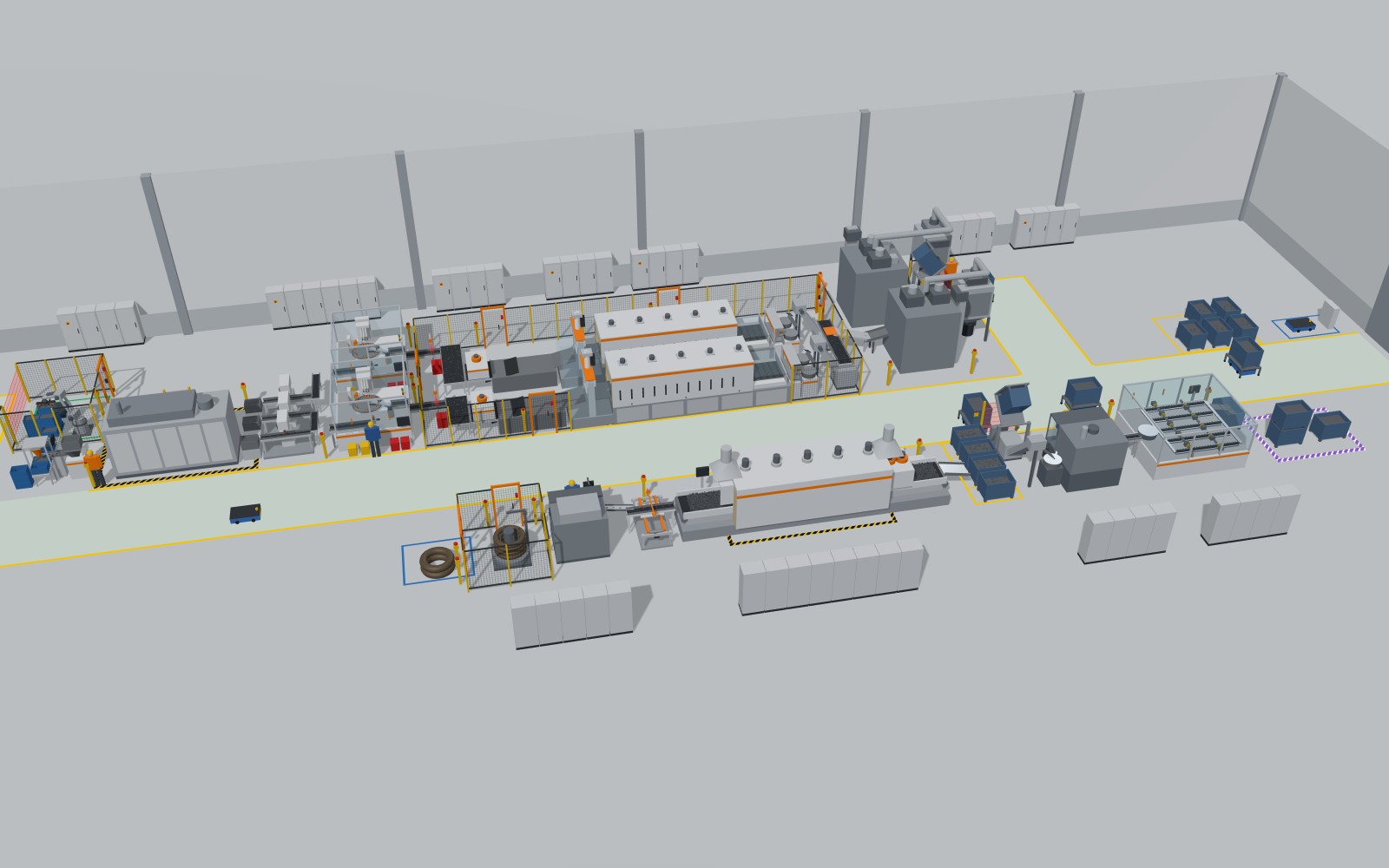
Rotate and zoom the view; select a machine or one of the buttons under the view to move in on that station. Its description appears below the buttons.
GALLERY
Concept renderings
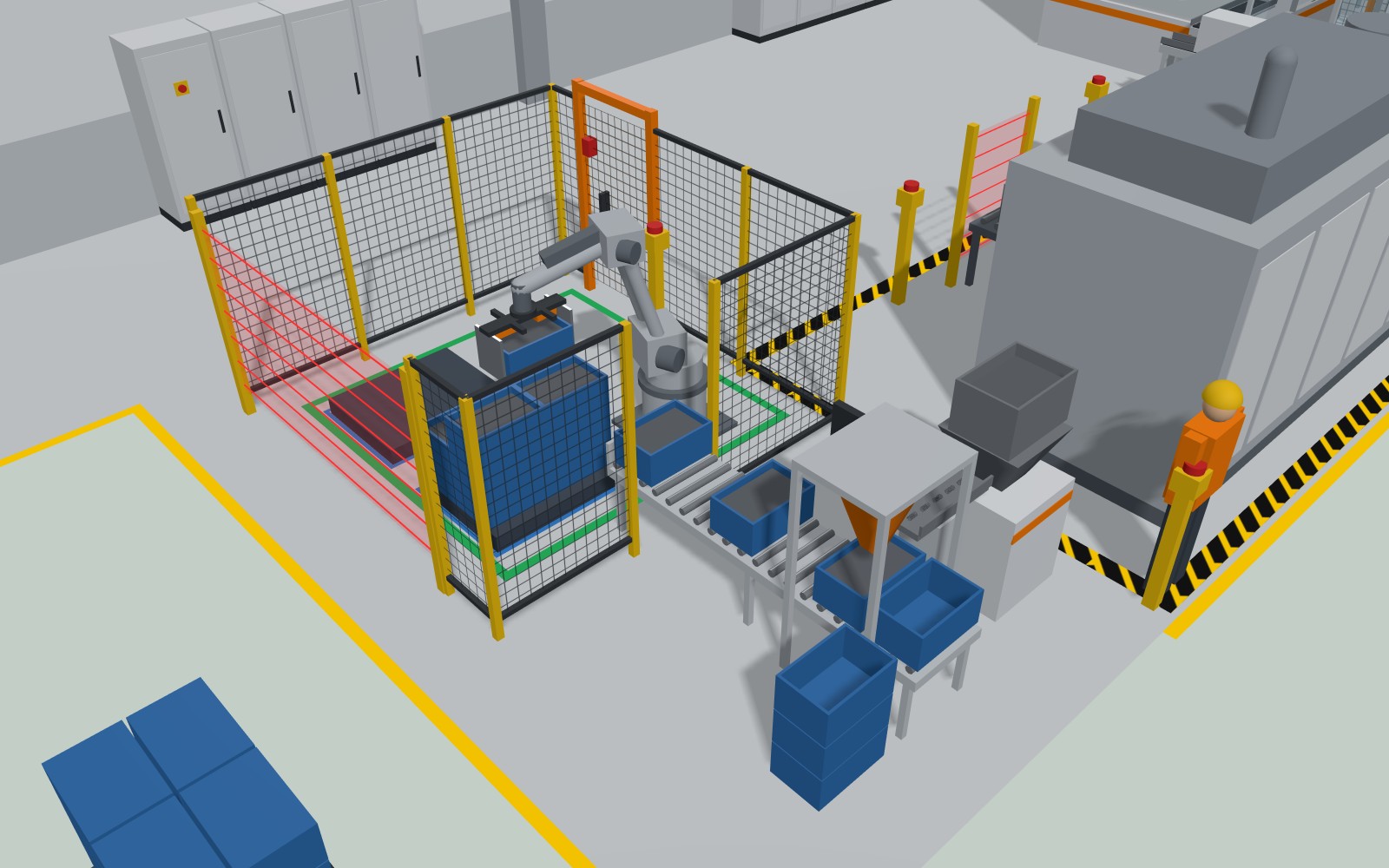
Schematic 3D renderings of a valve spring line concept; these are not site photos.
01 / PROCESS
Process chain: from coiling to packing
Valve springs are usually cold-coiled from oil hardened and tempered valve-quality wire (OT wire), then stress-relief tempered, end-ground and chamfered and deburred on the inside before multi-stage shot peening from coarse to fine shot, commonly in two stages. Some highly stressed springs use nitridable wire and are nitrided before peening. Hot setting follows peening; every spring is then load-tested and sorted into tolerance groups or rejected, color-marked, cleaned with rust protection and packed. Which operations are used, and in what order, depends on the wire grade and the customer's specification.
In hot setting the heated spring is compressed to a specified height to improve its relaxation resistance in service; heating temperature, compression and holding time follow the customer's process specification. The challenge in this line is the change between bulk and single-piece flow: tempering, peening and cleaning handle springs in bulk or in batches, and the end grinder is also fed and discharged in bulk, while deburring, hot setting, testing and marking need each spring oriented individually. We link the two kinds of operation with bin handling, bin tipping, hopper elevators and vibratory bowl feeders.
- Coiling
- Stress-relief tempering
- End grinding
- Inner chamfering and deburring
- Nitriding (optional)
- Shot peening
- Hot setting
- Water cooling and drying
- Load testing and sorting of every spring
- Color marking
- Cleaning and rust protection
- Weigh-count packing and palletizing
Orange operations are within our scope of supply; select one to open the reference configuration. Gray operations run on third-party machines or are outsourced. The sequence follows the customer's process.
Step by step: function and line concept
The “line concept” column describes our concept and scope for each step; gray steps run on third-party machines or are outsourced. Process set points follow the customer's process.
01Coiling
FunctionCold-coils the wire into the shape on the drawing.
Line conceptThe pay-off and the coiling machine are not built by us; they are supplied by the customer or sourced separately. Springs leaving the coiler drop straight onto our spreading conveyor.
02Stress-relief tempering
FunctionRelieves the stresses introduced by coiling and stabilizes the spring dimensions.
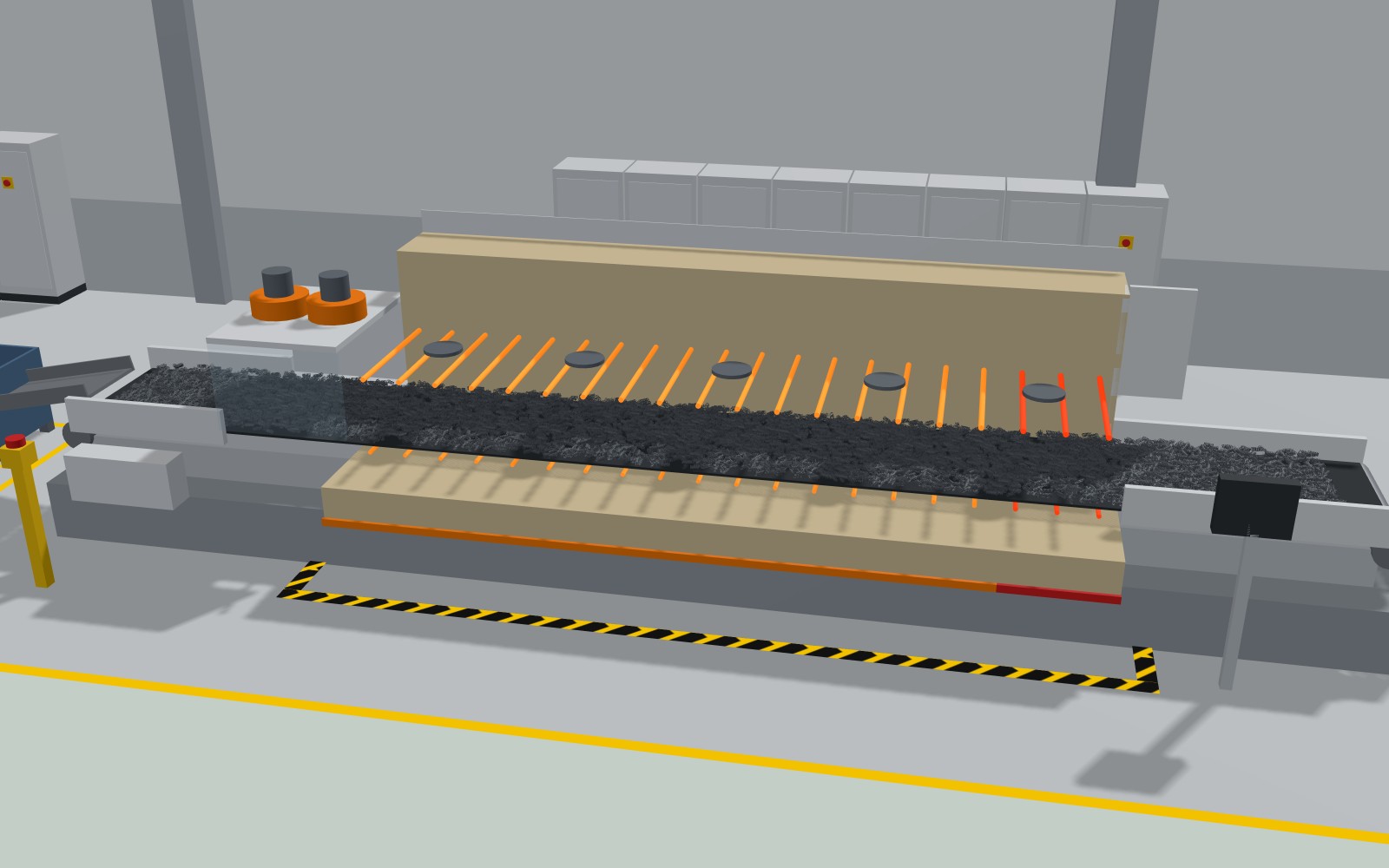
Line conceptContinuous mesh-belt furnace, electrically heated with multi-zone temperature control. A reciprocating spreader distributes the single stream from the coiler across the full belt width; springs are air-cooled at the exit and drop into bins. Temperature and time are set to the customer's process.
03End grinding
FunctionGrinds both spring ends flat to form the seating faces.
Line conceptThe end grinding machine is third-party equipment. We provide the feeding: an AGV delivers the bin, a hydraulic bin tipper empties it, and a hopper elevator with vibratory feeding supplies the grinder; after grinding a conveyor takes the springs to the deburring machine.
04Inner chamfering and deburring
FunctionRemoves the burr left on the inside of the end coils after grinding and cuts the inner chamfer.
Line conceptMulti-lane special-purpose machine: springs are indexed forward and rotated while milling cutters machine the inner chamfer of each end at two stations. The number of lanes is configured to the output.
05Nitriding (optional)
FunctionSome highly stressed springs are nitrided before peening to raise surface hardness.
Line conceptUsed where the product requires it and usually outsourced. The line reserves a bin area for outgoing and returning batches, and batches are traced by bin.
06Shot peening
FunctionIntroduces compressive stress in the spring surface to raise fatigue life; usually carried out in two stages from coarse to fine shot.
Line conceptThe peening machines and dust collectors are third-party equipment. We provide the bin area with AGV hand-over, bin tipping for loading, and the conveying and distribution from the stage-two peening machine to hot-setting feeding.
07Hot setting
FunctionCompresses the heated spring to a specified height to improve relaxation resistance in service.
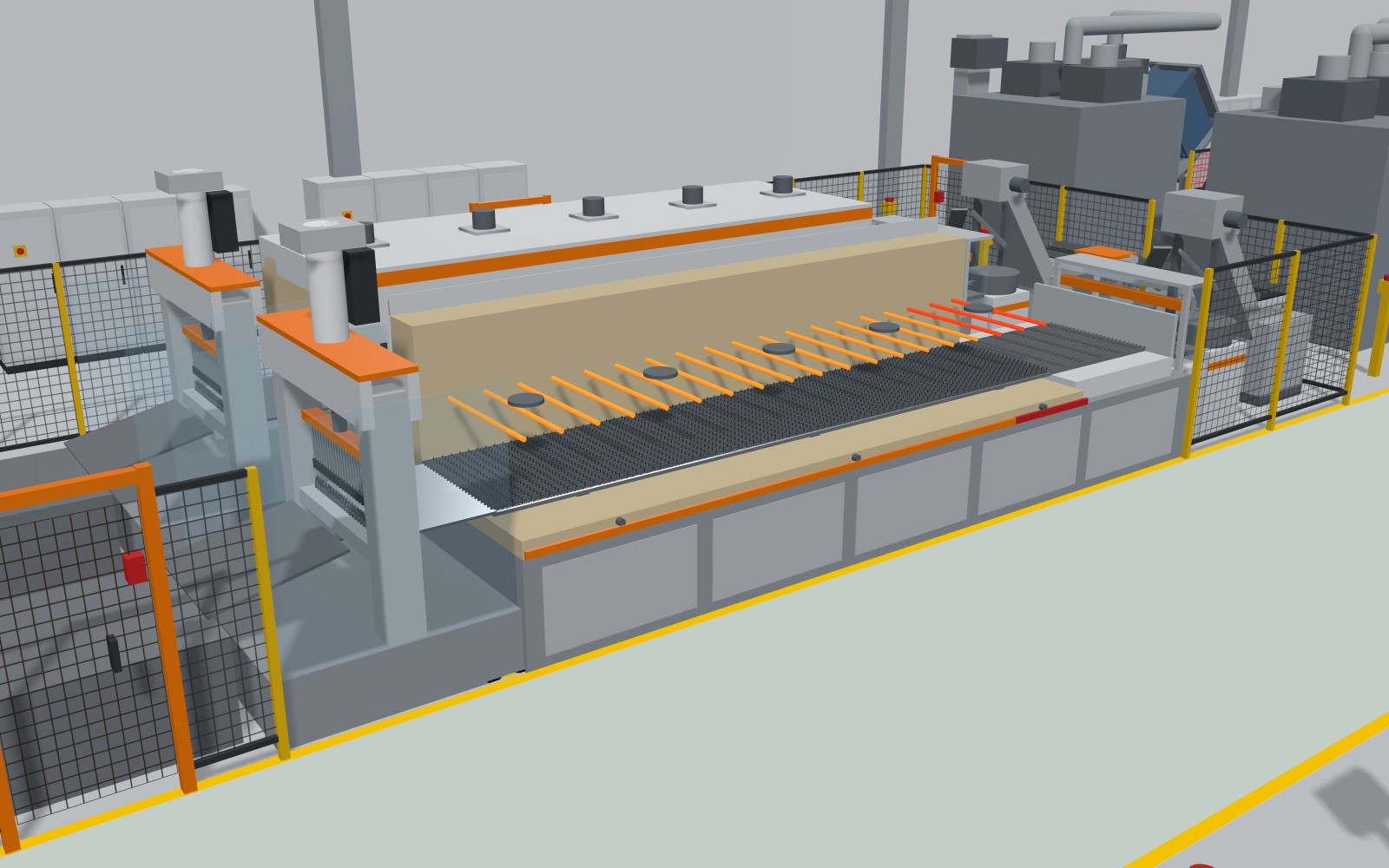
Line conceptA hopper elevator and vibratory bowl feeders orient and distribute the springs, and a pusher feeds them one by one into the multi-lane hot setting furnace. At the exit a multi-head servo press station compresses one row at a time and records force and displacement for every head. Temperature, soaking time and compressed height are set to the customer's process.
08Water cooling and drying
FunctionCools the springs to near room temperature after setting so that load test results are comparable.
Line conceptSprings drop from the press station straight into a water cooling tank, are drained and dried by air knives and then merged onto one conveyor; temperature is measured at the exit and springs that are too warm are not released to testing.
09Load testing and sorting of every spring
FunctionMeasures the load of every spring and sorts it into tolerance groups or rejects it.
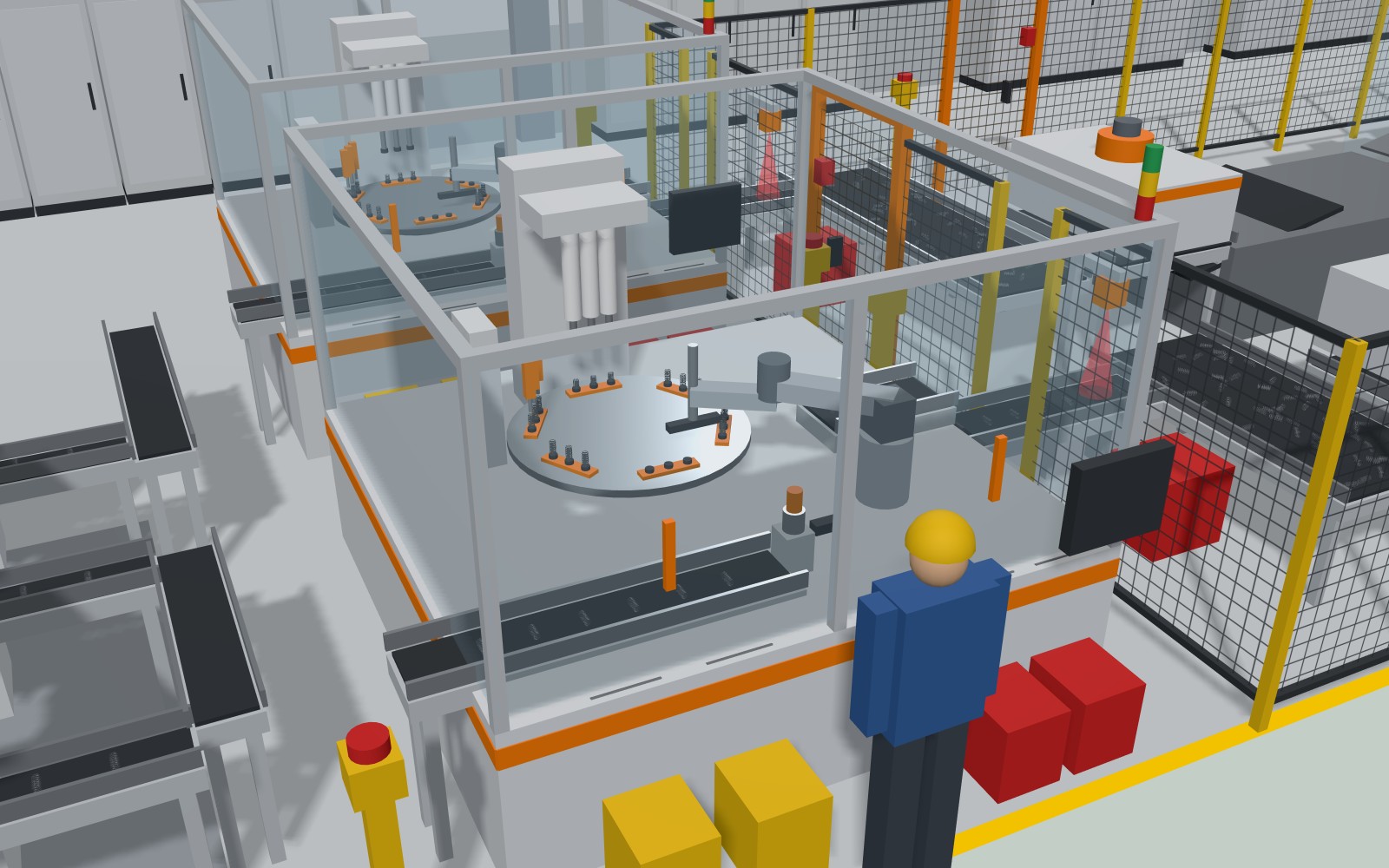
Line conceptAn indexing table with force-displacement measuring heads measures the load at the heights specified on the drawing and can calculate the spring rate; a robot loads and unloads and sorts the springs as good, high or low. Go/no-go gauging of the inner diameter and a drop gauge for the outer diameter are optional.
10Color marking
FunctionApplies the color mark required by the drawing for identification and error-proofing.
Line conceptPad-printing color marking machine with several heads working in parallel; the marking position is switched by product recipe.
11Cleaning and rust protection
FunctionCleans the spring surface and applies rust-preventive oil.
Line conceptThe cleaning machine is third-party equipment and is often provided by the customer. We provide basket loading, unloading and transfer to and from the machine.
12Weigh-count packing and palletizing
FunctionPacks the springs by count and palletizes them for dispatch.
Line conceptA basket tipping hopper, vibratory feeding and a weigh-count hopper fill the springs into totes; a robot stacks full totes on pallets, with AGV hand-over for dispatch as an option. Labels can link to batch and test data.
02 / FUNCTIONS
What the line does
Heat treatment and hot setting
- Stress-relief tempering in a continuous mesh-belt furnace with multi-zone control
- Reciprocating spreader covering the full belt width
- Multi-lane hot setting furnace with piece-by-piece feeding
- Multi-head servo press station recording force and displacement per head
- Water cooling, drying and exit temperature check after setting
Machining, testing and marking
- Multi-lane inner chamfering and deburring
- Force-displacement load testing of every spring
- Sorting by tolerance: good, high, low
- Go/no-go gauging of inner diameter and drop gauge for outer diameter (optional)
- Pad-printed color marking
Bin handling and feeding
- Bin buffers with AGV hand-over
- Hydraulic bin tippers
- Hopper elevators for continuous feeding
- Vibratory bowl feeders for orienting and distributing
- Automatic weigh-count packing and robot palletizing
Controls, data and safety
- PLC and HMI selectable to the customer's plant standard
- Batch and per-part test data recording, with an interface for MES
- Optional link to Droideal data acquisition
- Safety fencing, interlocked doors, safety light curtains and emergency stops
03 / STATIONS
Reference configuration and specifications
The line is custom-built. The table below is a reference configuration; actual specifications are defined by the product drawing, output target, customer process and site conditions.
Valve spring line
Custom-built. We supply stress-relief tempering, inner chamfering and deburring, hot setting, water cooling, load testing and sorting of every spring, color marking, packing and palletizing, with bin handling and linking between the operations; coiling, end grinding, shot peening and cleaning machines are third-party equipment.
- Type of supply
- Custom-built: supplied as a complete line, a section or a single machine, or as linking and automation integrated around the customer's existing coiling, end grinding, shot peening and cleaning machines.
- Line interface
- Upstream: springs from the coiling machine. End grinding, shot peening and cleaning machines are third-party equipment, supplied by the customer or sourced separately; we provide loading and unloading, bin handling and signal exchange. Where nitriding is outsourced, the line reserves a bin area for outgoing and returning batches.
- Springs
- Engine valve springs; wire diameter, outer diameter and free length as defined by the product drawing.
- Output
- Reference line rated at 5,000 springs/h; the number of machines and lanes is configured to the output target.Defined per project
- Stress-relief tempering
- Continuous mesh-belt furnace, electrically heated with multi-zone temperature control; a reciprocating spreader covers the full belt width, and springs are air-cooled at the exit and drop into bins. Furnace length and belt width are designed to the output and soaking time; temperature and time are set to the customer's process.
- Bin handling and feeding
- Bin buffers with AGV hand-over; hydraulic bin tippers empty the bins into hoppers, hopper elevators feed continuously, and vibratory bowl feeders orient and distribute the springs.
- Inner chamfering and deburring
- Multi-lane special-purpose machine: springs are indexed forward and rotated while milling cutters machine the inner chamfer of each end at two stations; the number of lanes is configured to the output.
- Hot setting
- Multi-lane hot setting furnace with guide channels and pushers feeding the springs one by one; a multi-head servo press station at the exit compresses one row at a time and records force and displacement per head. In the reference line each furnace has 24 lanes, and the number of furnaces is configured to the output and soaking time; heating temperature, soaking time and compressed height are set to the customer's process.Number of lanes defined per project
- Cooling after setting
- Water cooling tank, draining and air-knife drying, then merging onto one conveyor; temperature is measured at the exit and springs that are too warm are not released to testing.
- Load testing and sorting
- Indexing table with force-displacement measuring heads; load is measured at the heights specified on the drawing and the spring rate can be calculated; robot loading and unloading; sorting by tolerance into good, high and low. Go/no-go gauging of the inner diameter and a drop gauge for the outer diameter are optional; inspection items and tolerances follow the product drawing.
- Color marking
- Pad-printing color marking machine with several heads working in parallel; the marking position is switched by product recipe.
- Packing and palletizing
- Automatic weigh-count filling into totes and robot palletizing; AGV hand-over for dispatch as an option. Tote size, quantity per tote and pallet pattern follow the customer's requirements.
- Controls and data
- PLC and HMI can be selected to the customer's plant standard; batch and per-part test data are recorded, with an interface for MES; optional link to Droideal data acquisition.
- Safety
- Safety fencing, interlocked doors, safety light curtains and emergency stops; guarding and warning signs at hot areas. Can be designed to CE requirements.
04 / SCOPE
Where we fit and the scope of supply
We supply the line as a whole: the stress-relief tempering furnace, the inner chamfering and deburring machine, the hot setting furnace with its servo press station, load testing and sorting machines, the color marking machine, automatic weigh-count packing and robot palletizing, together with the bin handling, bin tipping and conveying that link these operations. Coiling machines, end grinding machines, shot peening machines and cleaning machines are not built by us; they are supplied by the customer or sourced separately, and we integrate them into the line. The scope of supply is defined per project.
Our scope of supply
- Stress-relief tempering furnace with spreading conveyor
- Bin handling: hydraulic bin tippers, hopper elevators and AGV hand-over
- Multi-lane inner chamfering and deburring machine
- Hot-setting feeding, hot setting furnace and servo press station
- Water cooling, drying and merging conveyor after setting
- Load testing and sorting machine (inner-diameter go/no-go gauging and outer-diameter drop gauge optional)
- Color marking machine
- Automatic weigh-count packing and robot palletizing
- Line controls, traceability data interfaces and safety guarding
Third-party machines (supplied by the customer or sourced separately)
- Pay-off and coiling machine
- End grinding machine
- Shot peening machines and dust collectors
- Cleaning machine
LET’S TALK
Start with your process needs
Discuss your workpieces, processes and line requirements with us.